Round and oval outdoor tables are perfect for those sunny days spent outside with family and friends. They create a cozy atmosphere, making every meal feel special. With plenty of styles and materials to choose from, you’ll find the perfect table that fits your space and vibe effortlessly.
Round & Oval Outdoor Tables
Find the perfect round or oval table to create cozy dining experiences under the open sky
Product List
Why Round and Oval? The Case for Curved Outdoor Dining
They're Made for Conversation
The psychology of round tables isn't just a King Arthur legend — it's backed by how people actually interact. When everyone sits equidistant from the center, side conversations don't form as easily. You're not shouting across a six-foot rectangle hoping someone at the far end can hear you. With a round or oval table, a group of six feels like a group, not two clusters of three.
For outdoor settings specifically, this matters even more. Background noise from neighbors, traffic, and wind already competes for your attention. A circular arrangement naturally pulls voices inward and makes dinner feel more intimate — even in a wide-open yard.
They Work Better in Compact Spaces
Patios, decks, and courtyard gardens are rarely perfectly square. They have planters, railings, hot tubs, and fire pits eating into the usable area. Rectangular tables demand straight sightlines and clearance on all four sides. Round and oval tables are far more forgiving.
A 48-inch round table can comfortably seat four adults and only needs about 10 feet of total diameter to allow chairs to push back comfortably. An oval extends that capacity without the hard corners that catch people on the hip as they squeeze past. If your outdoor space has ever felt cramped with a rectangular table, switching to round or oval is often the fix.
No Sharp Corners, Fewer Accidents
If you have kids running around the yard, round and oval tables are simply safer. There are no sharp table corners at eye level for a toddler to run into. This is one of the most practically underappreciated benefits of the shape, and one that parents shopping for outdoor furniture quickly move to the top of their priority list.
Choosing the Right Size
Small Round Tables (36–42 inches)
Ideal for apartments, small patios, or intimate dining for two to three people. A 36-inch round table seats two very comfortably and three in a pinch. These are popular for balcony dining, bistro setups, and side yard breakfast nooks. They pair beautifully with two armchairs or a small bench.
Medium Round Tables (48–54 inches)
The sweet spot for most American households. A 48-inch table seats four comfortably — a true family size — while a 54-inch round can accommodate five to six with standard side chairs. This size range works well on mid-sized decks and covered patios and leaves enough room for a host to walk around without rearranging chairs.
Large Round Tables (60–72 inches)
If you regularly entertain eight or more guests, a 60-inch or larger round table is worth considering. Keep in mind that the larger the round table, the more awkward the center can feel — items like centerpieces, serving dishes, and candles placed in the middle become hard to reach. Consider a lazy susan or tiered centerpiece stand if you go this route.
Oval Tables
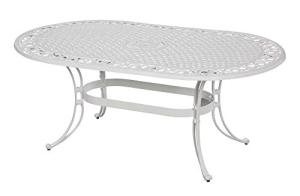
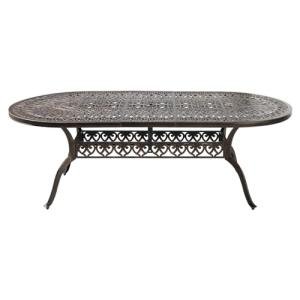
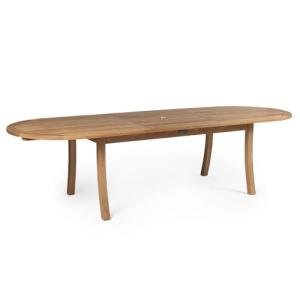
Oval tables are the perfect compromise between rectangular and round. They seat more guests than a comparably sized round table, handle longer, narrower patio spaces better, and still maintain that soft, social quality that makes round tables popular. A typical 72x42-inch oval seats six to eight adults and works beautifully on screened-in porches and larger deck spaces. Think of them as the round table's more flexible sibling.
Materials: What Works Best Outdoors in the USA
Aluminum
Aluminum is arguably the best all-around material for outdoor dining tables in the American climate. It doesn't rust, it handles UV exposure well, and it's light enough to move around your patio without needing two people. Cast aluminum adds a premium look with intricate molded designs — great for a more traditional or ornate aesthetic. Powder-coated aluminum resists scratching and fading and comes in dozens of colors. If you live anywhere with high humidity or near saltwater — think coastal Florida, Gulf states, or the Pacific Northwest — aluminum is the smart long-term investment.
Teak
Nothing ages quite as gracefully outdoors as teak. The natural oils in teak wood make it highly resistant to moisture, rot, and insects without any chemical treatment. Over time, untreated teak weathers to a silver-gray patina that many homeowners actually prefer over the original honey color. Teak round and oval tables tend to be heavier investment pieces — they're more expensive upfront but often last decades with minimal care. Annual teak oil application will keep the original color if that's your preference.
Wrought Iron
Heavier and more ornate than aluminum, wrought iron outdoor dining tables bring serious visual weight and traditional elegance. They're ideal for covered patios or areas with less direct exposure to prolonged moisture, as wrought iron can rust without proper maintenance or sealant. A round wrought iron table with a glass or tile top is a classic patio setup that has been a staple in American outdoor dining since the mid-20th century.
Resin Wicker / All-Weather Wicker
Resin wicker has evolved dramatically over the past decade. Today's all-weather wicker dining tables are UV-resistant, moisture-resistant, and look remarkably similar to natural rattan — without any of the degradation that natural materials suffer in outdoor settings. A round wicker dining table with a tempered glass top is one of the most popular combinations in the current U.S. market, particularly for buyers who want a natural, relaxed aesthetic that works in both warm and cooler climates.
Concrete and Stone
If you're building an outdoor dining space that's designed to stay in one place, concrete and stone top tables offer incredible durability and a modern, architectural look. A round concrete dining table is a statement piece on a modern patio. They're heavy — often several hundred pounds — so placement is more or less permanent, but they'll outlast almost any other material and require almost no maintenance beyond an occasional seal.
Tempered Glass Tops
Many round and oval outdoor dining tables use tempered glass tops over a metal or wicker base. Tempered glass is significantly stronger than standard glass and, if it does break, shatters into small blunt pieces rather than sharp shards — an important safety consideration for outdoor environments. Glass tops are easy to clean, show off the base structure beneath, and feel naturally cool in hot weather.
Style Trends in Outdoor Dining Right Now
Modern Organic
Clean silhouettes, natural materials, and a muted color palette have dominated outdoor furniture trends across the country. Think brushed aluminum legs with a live-edge wood or concrete top, or a round teak table with minimalist hairpin-style legs. The modern organic look works particularly well in outdoor spaces designed to feel like an extension of the home's interior.
Coastal and Bohemian
Especially popular in sunbelt states and coastal markets, this style leans on woven textures, bleached tones, and curved silhouettes. An oval wicker table surrounded by rattan chairs, a few potted palms, and string lights overhead captures this aesthetic perfectly. It's relaxed, layered, and intentional without being fussy.
Industrial Outdoor
Black powder-coated steel bases with round concrete or dark tile tops, industrial-style outdoor dining is becoming more common in urban settings — rooftop terraces, modern townhome patios, and compact urban backyards. The aesthetic is bold and durable, and the dark finishes hide weathering and everyday use surprisingly well.
Practical Buying Tips Before You Order
Measure twice. Walk your patio with a tape measure before you browse. Mark off the footprint of the table AND the space needed for chairs to pull out comfortably — at least 36 inches of clearance from the edge of the table to any wall, railing, or planter.
Check the umbrella hole. Many outdoor dining tables come with a center umbrella hole, and some come with it as an optional feature. If you're in a sunny region — Arizona, Texas, Southern California — make sure the table you're ordering either comes with a hole or can accommodate one, or plan to source shade separately.
Think about weight. If you live in a region with high winds or unpredictable weather, heavier tables are an advantage. Aluminum tables may need to be stored or weighted during storm season. A concrete or cast iron table in a hurricane-prone area should ideally be placed under a permanent roof structure.
Check care requirements. Some materials require seasonal sealing, annual oiling, or specific cleaning products. Be honest with yourself about how much maintenance you're willing to do. Teak is worth every bit of the effort if you'll actually oil it once a year — otherwise aluminum or resin wicker is a lower-effort path to a beautiful result.
Consider a set vs. table only. Buying a matching dining set (table plus chairs) ensures visual cohesion and structural compatibility. If you're mixing pieces, confirm that your chair seat height (typically 17–19 inches) is appropriate for your table height (usually 28–30 inches standard for outdoor dining).
Round and oval outdoor dining tables are more than just a shape preference — they're a philosophy about how you want to eat, entertain, and live outdoors. They encourage conversation, adapt to tighter spaces, reduce injury risk for active households, and deliver a softer, more inviting visual rhythm than angular tables.
From a modest 36-inch bistro round on a city balcony to a sweeping 84-inch teak oval anchoring a lakeside deck, there's a table in this category for every budget, every space, and every style. The best one isn't necessarily the biggest or the most expensive — it's the one that makes your outdoor meals feel like the ones worth remembering.