Summer days are meant for enjoying great food and good company, but the sun can really put a damper on your outdoor fun. A quality patio umbrella not only adds style to your dining area but also provides the shade you need to stay cool. Pair it with a sturdy base, and you've got a winning setup that keeps you comfortable all season long.
Patio Umbrellas & Bases
Stay cool and stylish while you enjoy your outdoor dining experience
Product List
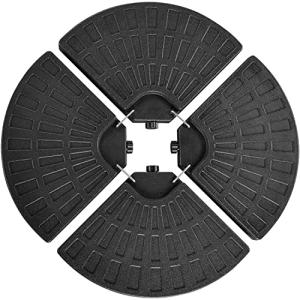
Yaheetech Heavy-Duty Umbrella Base
Product Review Score
4.51 out of 5 stars
145 reviews$65.99 $48.99
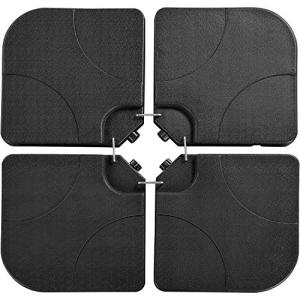
Yaheetech Patio Umbrella Base Set
Product Review Score
4.89 out of 5 stars
146 reviews$69.99 $59.99
Why Patio Umbrellas Are Worth the Investment
A lot of people treat a patio umbrella as an afterthought — something to throw in the cart after the furniture is picked out. But once you've spent an afternoon outdoors under proper shade, it's hard to go back.
Sun protection is the obvious benefit. The CDC estimates that UV radiation is the primary cause of skin cancer, and most Americans aren't applying sunscreen every time they step outside. A quality patio umbrella with a UPF 50+ canopy blocks up to 98% of UV rays, giving your family real protection without asking anyone to slather on sunblock.
Beyond health, shade dramatically changes how comfortable an outdoor space feels. Research shows that shaded areas can feel 10 to 15 degrees cooler than spots in direct sunlight. That's the difference between using your patio or retreating back inside by noon.
And then there's the style factor. A well-chosen umbrella finishes a patio the way a rug finishes a living room. It creates visual structure, anchors the seating area, and signals that the space was actually designed rather than just assembled.
Types of Patio Umbrellas
Not all umbrellas work the same way, and the right style depends on your space, your furniture layout, and how you plan to use the shade.
Market Umbrellas
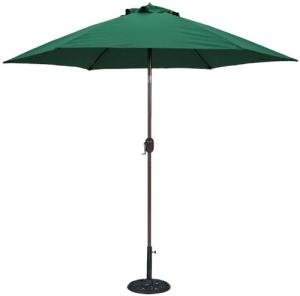
Market umbrellas are the classic design — a center pole running through the middle of the canopy, usually positioned through a hole in your patio table. They're simple, reliable, and widely available in sizes ranging from 7.5 feet to 11 feet in diameter.
These are the best choice for most residential setups. They're easy to open and close, compatible with most dining sets, and come in a huge range of fabrics, colors, and frame materials. If you have a standard outdoor dining table with an umbrella hole, a market umbrella is almost certainly the right call.
Cantilever and Offset Umbrellas
Cantilever umbrellas — also called offset umbrellas — have the pole positioned to the side rather than through the center. The canopy hangs out over the shaded area on an arm, which means there's no pole in the way of your furniture or your guests' legs.
This design is ideal for lounge chairs, sectional sofas, or any seating arrangement where a center pole would be awkward or obstructive. Many cantilever umbrellas can also rotate 360 degrees and tilt, so you can follow the sun as it moves throughout the day. They require a larger, heavier base to counteract the offset weight, but the flexibility they offer is hard to beat.
Rectangular and Square Umbrellas
Round isn't the only option. Rectangular and square canopies provide better coverage over dining tables and sectional seating arrangements where the shade needs to cover a longer, more linear area. These come in both center-pole and cantilever configurations.
Tilting Umbrellas
Tilt functionality is worth paying attention to. A push-button tilt mechanism lets you angle the canopy to block low-angle morning or afternoon sun without repositioning the entire umbrella. Some models offer a "crank tilt" that gives you more precise control. If your patio gets sun at varying angles throughout the day, tilt functionality isn't a luxury — it's a necessity.
Solar and LED Umbrellas
Solar-powered umbrellas with integrated LED lighting have become genuinely useful in recent years. A small solar panel embedded in the canopy charges a battery during the day, and when the sun goes down, you get ambient lighting without running any extension cords. These are popular for decks and patios where evening entertaining is common.
Choosing the Right Canopy Fabric
The canopy is the part that does the actual work, so it deserves careful attention.
Polyester is the most affordable option and works fine for light residential use. It's widely available in a huge range of colors and patterns, but it tends to fade and degrade more quickly under prolonged UV exposure.
Solution-dyed acrylic — with Sunbrella being the most recognized brand name — is the gold standard for outdoor fabric. The color is baked into the fiber rather than applied to the surface, which means it resists fading, mildew, and moisture far better than polyester. It costs more, but it genuinely lasts longer and holds its appearance through multiple seasons.
Olefin sits between polyester and acrylic on the price-to-performance scale. It's a solid middle-ground choice for homeowners who want durability without the premium price of acrylic.
Sunbrella and similar performance fabrics also offer significantly better UV protection ratings. Look for a UPF rating on the canopy spec sheet — UPF 50+ is the benchmark to meet for meaningful sun protection.
Umbrella Frame Materials
The frame is what keeps the canopy where it belongs, especially when the wind picks up.
Aluminum is the most popular frame material for residential umbrellas. It's lightweight, rust-resistant, and holds up well to moisture. Powder-coated aluminum resists scratches and fading and is easy to clean.
Steel is stronger and heavier than aluminum, which makes it common in commercial applications. The downside is that steel can rust if the finish is compromised, so it requires a bit more maintenance in wet climates.
Wood — particularly teak and eucalyptus — gives umbrellas a natural, warm aesthetic that looks beautiful in traditional and transitional outdoor spaces. Wood requires seasonal maintenance (oiling or sealing) to prevent cracking and weathering, but properly maintained wooden umbrella poles can last for many years.
Fiberglass ribs in the canopy frame offer a meaningful advantage: flexibility. Unlike aluminum ribs, fiberglass can flex under wind pressure without snapping. Many higher-end umbrellas use fiberglass ribs even if the pole is aluminum or wood, specifically to improve wind resistance.
Patio Umbrella Bases: The Part People Forget Until It's Too Late
An umbrella without a proper base is just a very frustrating kite. Bases are not the exciting part of this purchase, but they are absolutely critical to how well your umbrella performs.
How Much Weight Do You Actually Need?
A common mistake is underestimating how much base weight is required. As a general rule:
- Umbrellas up to 9 feet: minimum 50 lbs
- Umbrellas 9 to 11 feet: minimum 75 lbs
- Cantilever umbrellas: minimum 100 to 150 lbs (some require even more)
These numbers assume calm-to-moderate wind conditions. If you live in an area with frequent wind gusts, go heavier. An umbrella that tips over in a breeze is a hazard and will likely damage the canopy or frame.
Base Materials
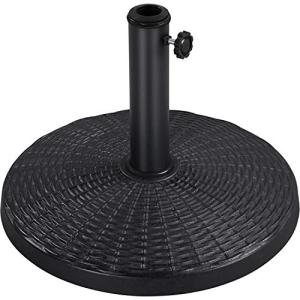
Concrete and resin bases are among the most affordable options. Filled resin bases can be topped off with sand or water to add weight, which makes them easier to move when empty. Solid concrete bases are extremely stable but heavy to relocate.
Steel bases offer a sleeker look than resin and can be powder-coated to match your umbrella or furniture. Cast iron bases are especially durable and heavy, making them a great choice for windy environments.
Decorative stone and granite bases are premium options that add visual weight to the base and often look more intentional as part of a curated patio design.
Freestanding vs. In-Table Bases
If your patio furniture includes a table with an umbrella hole, you can often use the table itself as the primary anchor — though most manufacturers still recommend a weighted base beneath the table to prevent tipping. Freestanding bases are required for cantilever umbrellas and for situations where you want to position shade independent of a table.
Rolling and Wheeled Bases
For larger, heavier bases — particularly those required by cantilever umbrellas — a base with integrated wheels is a practical feature. Being able to roll the entire setup into a garage or shed during a storm or through winter months dramatically extends the life of both the umbrella and the base.
Sizing Your Patio Umbrella
Getting the size right ensures you actually get shade where you need it.
For a round dining table, a general rule is to add 2 feet to the table diameter for your umbrella size. A 48-inch (4-foot) table pairs well with a 9-foot umbrella. A 60-inch table works better with a 10 or 11-foot canopy.
For lounge furniture and sectional sofas, think about the full footprint you're trying to cover and choose accordingly. Cantilever umbrellas typically offer more coverage flexibility since they can be positioned precisely.
Don't forget to account for overhead clearance if you have a pergola or covered section of your deck nearby.
Caring for Your Patio Umbrella
A few simple habits will add years to the life of your umbrella. Close it when it's not in use, especially during high winds or storms. Rinse the canopy periodically with clean water to remove dirt and pollen. If mildew appears on the fabric, most performance fabrics can be treated with a mild soap and water solution.
Store the umbrella — or at minimum, remove the canopy — during the off-season. UV exposure, freezing temperatures, and moisture do the most cumulative damage over winter months when no one is using the patio.
Finding the Right Umbrella for Your Space
Whether you're outfitting a cozy apartment balcony, a sprawling backyard dining area, or a commercial restaurant patio, there's an umbrella and base combination that fits. Focus on the fabric quality and UPF rating first, then consider the frame material and base weight relative to your climate and typical wind conditions. Style and color are the fun part — and with the range of options available, it's genuinely easy to find something that looks like it belongs in your space rather than something you had to settle for.
Shade done right isn't just comfortable. It's the thing that makes your outdoor space feel like a destination.