Outdoor dining chairs are essential for creating a cozy space to enjoy meals in your backyard or patio. Whether you're hosting a barbecue or just relaxing with a book, the right chairs can make all the difference in comfort and style. Check out our selection to find exactly what fits your vibe and needs for outdoor dining.
Outdoor Dining Chairs
Discover comfortable and stylish seating options for your outdoor meals and gatherings
Product List
Why Outdoor Dining Chairs Are a Category All Their Own
You might wonder whether you can just pull some indoor chairs outside for the summer. Technically, yes. Practically, no. Outdoor dining chairs are engineered to live outside, and that engineering matters more than most people realize.
Indoor furniture absorbs moisture, warps in heat, fades in UV light, and rusts if it has any metal components exposed to rain or morning dew. Outdoor dining chairs, by contrast, are built from materials and finished with coatings specifically designed to resist all of those things. They drain quickly, dry fast, resist mold and mildew, and hold their color season after season without needing to be dragged inside every time clouds roll in.
They're also proportioned differently. Most outdoor dining chairs are built slightly wider and sturdier than their indoor counterparts — because outdoor life is casual, layered clothing is common, and nobody wants to feel like they're perching rather than sitting.
Materials: What Your Chairs Are Made Of Matters
The most important decision you'll make when buying outdoor dining chairs isn't the color or the style — it's the material. Each option has real tradeoffs.
Aluminum
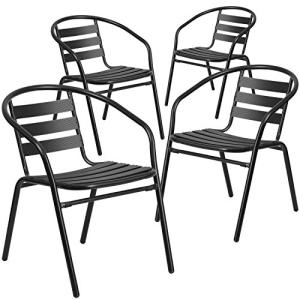
Aluminum is the go-to material for good reason. It's lightweight, fully rustproof, and surprisingly strong. You can move an aluminum chair across a deck with one hand, which matters more than you'd think when you're rearranging for a dinner party. Modern aluminum outdoor dining chairs come powder-coated in dozens of colors, and that finish holds up beautifully against sun and rain for years.
The one thing aluminum doesn't always deliver is warmth. It can feel slightly industrial or minimal depending on the design. But manufacturers have responded to this, and today's aluminum chairs come in styles ranging from sleek commercial-grade modern to warmly traditional looks that echo wrought iron without the weight.
Teak and Hardwood
If you want a dining chair that looks genuinely beautiful and only gets better with age, teak is hard to beat. It's a naturally dense, oily hardwood that resists water, insects, and rot without any chemical treatment. Left untreated, teak weathers to a distinguished silver-gray. Treated annually with teak oil, it holds its warm honey color indefinitely.
Other hardwoods like eucalyptus and shorea offer similar properties at lower price points. Hardwood outdoor dining chairs tend to be heavier, which actually works in their favor in windier climates — they're less likely to tip over or blow around.
All-Weather Wicker and Resin
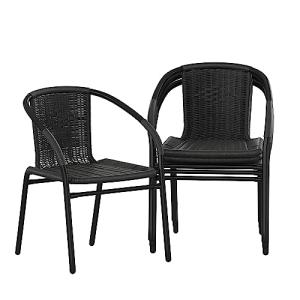
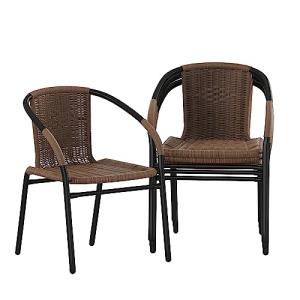
Wicker outdoor dining chairs deliver a relaxed, coastal, or bohemian feel that's hard to replicate in other materials. Traditional wicker made from natural fibers is not suitable for year-round outdoor use, but all-weather resin wicker — woven from synthetic polyethylene over an aluminum frame — is extremely durable. It handles sun, rain, and temperature swings without cracking, fading, or unraveling.
Resin wicker chairs are often more comfortable than they look because the weave has a slight give to it, and they pair naturally with cushions for extra coziness.
Wrought Iron and Steel
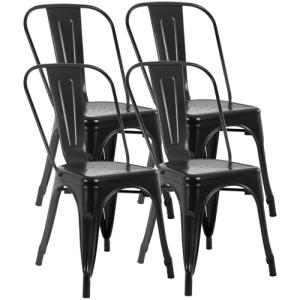
Wrought iron and powder-coated steel outdoor dining chairs are the heaviest option, and that's their defining feature. They don't move. They don't tip. They feel permanent and substantial in a way that lighter materials simply can't match. If your patio is exposed and windy, heavy metal chairs are genuinely worth the extra effort to move when needed.
The tradeoff is maintenance. Steel can rust at scratches or chips in the powder coating, so annual touch-ups help extend the life of these chairs significantly. Wrought iron is more corrosion-resistant but also more expensive and heavier still.
Polywood and HDPE Plastic
High-density polyethylene (HDPE) furniture, often branded under names like POLYWOOD, is made from recycled plastic lumber. It requires almost zero maintenance — no staining, no painting, no sealing — and it truly doesn't care about weather. You can leave it out through a New England winter without a second thought.
HDPE outdoor dining chairs have improved dramatically in terms of appearance. They now come in a wide range of colors and classic silhouettes that look nothing like cheap plastic patio furniture. For families with kids, vacation homes, or anyone who wants genuinely zero-maintenance seating, HDPE is one of the smartest choices on the market.
Styles: Matching Your Chairs to Your Space
Outdoor dining chairs come in a wide enough range of styles that you can find something that fits nearly any aesthetic — from a modern urban rooftop to a farmhouse back porch.
Modern and Contemporary
Clean lines, minimal ornamentation, and solid colors define the modern outdoor dining chair. These often feature aluminum or powder-coated steel frames with sling seats, solid seats, or slim profile designs. They work especially well on concrete or composite decking in urban and suburban settings.
Classic and Traditional
Windsor-back chairs, ladder-back designs, and chairs with curved arms bring a timeless quality to outdoor dining. Often available in teak, hardwood, or cast aluminum that mimics the look of wrought iron, these chairs suit covered porches, brick patios, and gardens with a more formal or traditional character.
Coastal and Relaxed
Rope-wrapped frames, woven resin wicker, and light driftwood tones define the coastal style. These chairs feel unhurried and easy, and they pair naturally with weathered wood tables, string lights, and anything near a lake, river, or ocean.
Farmhouse and Rustic
Cross-back chairs, X-back chairs, and bentwood designs with an aged or natural finish bring warmth to outdoor dining spaces. They're particularly popular on covered back porches and for outdoor entertaining that leans into a garden-party or harvest-dinner feel.
Industrial
Metal-framed chairs with minimal cushioning and an intentionally raw or utilitarian look fit rooftop decks, urban patios, and spaces where the architecture skews contemporary. Think wire mesh seats, matte black finishes, and hardware that's meant to be seen.
Comfort Features Worth Looking For
Style and material get most of the attention in outdoor dining chair shopping, but comfort deserves equal weight — especially if you tend to linger at the table after meals.
Seat depth and width matter for longer sits. Look for chairs with at least 17–18 inches of seat depth if you plan to use them for extended gatherings rather than quick breakfasts.
Armrests add comfort but also add width, which means you need more space between chairs around a table. Measure your table and planned spacing before committing to armed chairs.
Cushion compatibility is worth checking even if your chairs come without cushions. Many outdoor dining chairs are designed to accept standard seat pads, which gives you flexibility to add softness later. Look for models with tie loops to keep cushions in place on breezy days.
Stack and fold functionality is a practical consideration that gets undervalued. Stackable outdoor dining chairs save storage space dramatically, especially if you're setting up for larger gatherings occasionally. Folding chairs are the most portable and easiest to store.
How to Choose the Right Number of Chairs
A standard 4-person outdoor dining table needs four chairs, obviously — but it's worth thinking one size up if your household regularly hosts more. Having six chairs for a four-person table means you're never scrambling when extra people show up. Similarly, chairs that stack mean storage isn't a barrier to owning a few extras.
For larger gatherings, consider whether your chairs are lightweight enough to move easily from a storage area to your dining space. Aluminum and resin wicker chairs excel here. Teak and wrought iron are worth the trade-off in permanence for fixed dining setups.
Weather Considerations Across the US
The United States covers a remarkable range of climates, and the best outdoor dining chair for a Miami patio is different from the best choice for a Minnesota deck.
In hot, sunny climates like Arizona, Southern California, and Florida, UV resistance is a top priority. Look for powder-coated aluminum or HDPE materials that are tested for fade resistance. Teak performs well in heat but benefits from periodic oiling in very dry conditions.
In humid coastal climates — the Gulf Coast, Southeast, and Pacific Northwest — moisture resistance and mold resistance matter most. Avoid materials with open-grain surfaces that trap moisture. Aluminum, all-weather resin wicker, and HDPE are the strongest performers here.
In cold-winter climates across the Midwest and Northeast, materials that handle freeze-thaw cycles without cracking are essential. HDPE and aluminum are the top choices. Teak holds up with proper care. Cushions should always be stored indoors over winter.
Caring for Your Outdoor Dining Chairs
Even the most weather-resistant chairs last longer and look better with basic care.
Clean regularly. A simple rinse with a garden hose and occasional scrub with mild soap keeps most outdoor dining chairs in great shape. For resin wicker, pay attention to the weave joints where debris and moisture accumulate.
Store cushions indoors. Even outdoor-rated cushions benefit from indoor storage during extended rain or at the end of the season. Most outdoor dining chair cushions are made from solution-dyed acrylic (often under brand names like Sunbrella) that resists fading and mildew, but indoor storage extends their life considerably.
Touch up metal finishes. For powder-coated steel and aluminum chairs, address any chips or scratches with touch-up paint before rust can get a foothold.
Oil or seal wood annually. Teak and hardwood outdoor dining chairs benefit from annual treatment with teak oil or an appropriate sealant if you want to maintain their natural color rather than letting them silver.
Cover or store for winter. In climates with harsh winters, a breathable outdoor furniture cover extends the life of almost any chair material. HDPE is the notable exception — it genuinely doesn't need it.
Frequently Asked Questions
Can outdoor dining chairs stay outside year-round? Many can, depending on material. HDPE, aluminum, and all-weather resin wicker are the most resilient for year-round exposure. Hardwood and metal chairs benefit from covers or storage during harsh winters.
What's the most comfortable material for outdoor dining chairs? Comfort comes from design more than material, but chairs with cushions or a slight recline in the seat back tend to score highest for long sits. Resin wicker has a natural give that many people find comfortable even without cushions.
Are outdoor dining chairs standard height? Standard outdoor dining chairs seat between 17 and 19 inches from the ground, which works with most standard-height outdoor dining tables (28–30 inches). Counter-height tables (34–36 inches) and bar-height tables (40–42 inches) require correspondingly taller chairs.
How do I match chairs to my dining table? Consistency in material or finish color is the simplest approach. But mixing intentionally — such as a teak table with metal chairs, or a concrete table with wicker chairs — can work well when the style families are compatible.
Shop With Confidence
Outdoor dining chairs are one of those purchases where quality pays dividends season after season. The right set becomes a fixture of the best parts of your warm-weather life — long dinners that stretch into the evening, weekend breakfasts, holiday gatherings moved outside. Take time to match material to your climate, style to your space, and comfort level to how you actually use your outdoor dining area. The chairs you choose today can still be serving you well a decade from now.