Protect your outdoor dining set with high-quality furniture covers that fit just right. These covers keep your furniture safe from the elements, whether it's rain, sun, or dirt. They’re easy to use, durable, and help you maintain that fresh, new look for years to come.
Outdoor Furniture Covers
Protect your outdoor dining sets with stylish and durable furniture covers that keep them looking great all year round
Product List
Why Outdoor Furniture Covers Matter More Than You Think
Most people don't think about covers until something goes wrong — until the cushion develops mold, the metal starts rusting, or the wood warps and splits after a rough season. By then, you're either living with damaged furniture or shopping for a replacement.
A quality outdoor furniture cover acts as a first line of defense against everything Mother Nature throws at your patio. UV rays fade and crack materials over time. Rain seeps into cushion fibers and creates the perfect environment for mildew. Wind carries dust, pollen, and debris that grind into surfaces and finishes. Even in mild climates, seasonal temperature swings stress materials in ways that add up over the years.
The math is pretty simple: a $40–$80 cover can protect thousands of dollars of outdoor furniture and push its lifespan from a few years to a decade or more.
Types of Outdoor Furniture Covers
Not all outdoor furniture is the same shape, and neither are the covers. Finding a cover that actually fits your specific piece matters — a cover that's too loose flaps in the wind and lets moisture pool inside; one that's too tight can stretch, tear, or trap condensation against the furniture.
Patio Chair Covers
Designed to fit standard dining chairs, Adirondack chairs, lounge chairs, and everything in between. Many come in stackable versions so you can cover an entire set of four or six chairs with a single cover rather than wrestling with individual bags for each one. Look for reinforced hems and drawstrings at the base that let you cinch the cover snugly against the chair legs.
Patio Table Covers
Available in round, square, rectangular, and oval configurations to match virtually any table shape. Sizing here is critical — measure the full dimensions of your table, including any umbrella hole if applicable. Some table covers include a separate umbrella canopy flap, which is a thoughtful detail if you leave your patio umbrella in place during storage.
Sofa and Sectional Covers
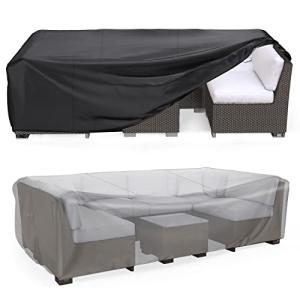
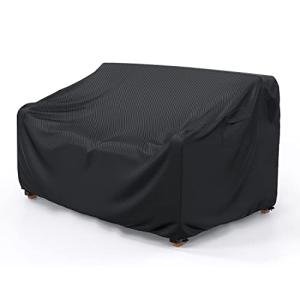
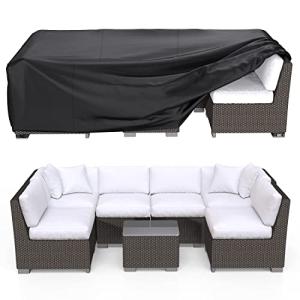
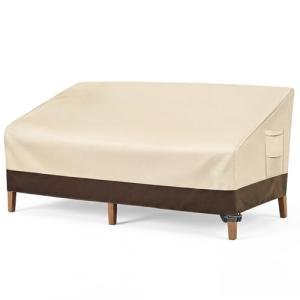
Outdoor sofas and sectionals are among the most valuable pieces of outdoor furniture and also among the most vulnerable — their large cushion surface area makes them prime targets for UV damage and moisture. A well-fitted sofa cover should wrap cleanly around the arms and base without bunching. Sectional covers often come in modular configurations (left-arm piece, right-arm piece, corner piece) or as large universal covers designed to drape the whole assembly.
Dining Set Covers
If you have a matching table-and-chairs set, a dining set cover is the efficient choice. These covers are sized to fit the whole ensemble — table with chairs tucked underneath — in a single piece. They save time and usually offer better protection than trying to cover each element separately.
Grill and BBQ Covers
Technically adjacent to furniture, but essential for any outdoor cooking setup. Grill covers are sized to fit kettle grills, barrel smokers, gas grills, and kamado-style cookers. They protect your burners, grates, and control panels from rust and clogging while keeping rodents and insects from taking up residence inside.
Chaise Lounge Covers
Long, low, and shaped differently than a standard chair, chaise lounges need their own dedicated cover style. Look for a cover that fully wraps the footrest extension without leaving gaps at the base.
Fire Pit Covers
A fire pit without a cover is an open invitation for water to collect in the basin, rust out the metal, and damage your gas burner components if you have a gas model. Fire pit covers are typically round or square, heavy-duty, and designed to withstand the residual heat that lingers even after a fire dies down.
What to Look for in an Outdoor Furniture Cover
Walk into any home goods store or search online and you'll find covers at every price point — from budget options under $20 to heavy-duty professional covers over $100. The price difference usually reflects real differences in materials, construction, and longevity. Here's what separates a cover that lasts from one that falls apart after a season.
Material and Fabric Weight
The most common materials for outdoor furniture covers are polyester, polyethylene, and Oxford cloth, with weights typically measured in denier (D). Higher denier = heavier fabric = more durable. A 300D polyester cover is on the lighter end and works fine for mild climates or as an everyday dust cover. A 600D or 900D Oxford cloth cover is a substantially more robust choice for areas with harsh winters, heavy rain, or high UV exposure.
Look for covers with a waterproof coating (usually a PVC or polyurethane backing) on the interior of the fabric, not just a water-resistant outer finish. True waterproofing ensures that even sustained rain doesn't eventually soak through.
UV Resistance
All outdoor covers face constant UV bombardment, and the cheap ones show it fast — the fabric fades, becomes brittle, and eventually starts to crack and shed. Look for covers that specifically mention UV-resistant or UV-stabilized materials. This is especially important in sun-heavy regions like Arizona, California, Texas, and Florida.
Ventilation and Breathability
Here's something a lot of buyers overlook: a completely sealed, non-breathable cover can actually make moisture problems worse. If condensation forms inside a sealed cover, it has nowhere to go — and that trapped humidity is exactly what causes mold and mildew on cushions. Quality outdoor furniture covers include air vents, mesh panels, or breathable fabric layers that allow moisture vapor to escape while still keeping rain out.
Secure Fastening Systems
Wind is the enemy of any outdoor furniture cover. A cover that blows off in the first storm isn't protecting anything. Look for covers with drawstrings at the hem, elastic hems on specific sections, buckle straps, or tie-down cords. Some premium covers include all of the above. If you live somewhere with strong seasonal winds, prioritize covers with multiple fastening points rather than a single drawstring.
Seam Construction
Stitching quality is often where less expensive covers cut corners. Heat-sealed seams are more watertight than sewn seams, though high-quality covers use double-stitched or reinforced construction at high-stress points like corners and hems. Inspect seam quality before purchasing if you can, or look for product descriptions that specify reinforced construction.
Seasonal Storage vs. Year-Round Use
There's an important distinction between covers intended for seasonal storage (putting furniture away for the winter) and those designed for year-round everyday use.
Seasonal storage covers tend to prioritize durability and maximum weather protection over convenience. They're often heavier, bulkier, and less attractive — function over form, since they're going to be on the furniture for four or five months straight.
Year-round everyday covers need to balance protection with ease of use. You'll be putting them on and taking them off frequently, so lightweight materials, quick-release buckles, and a more streamlined design matter. Many homeowners keep one cover for daily use (keeping off dew and casual rain) and a second heavy-duty cover for the off-season.
How to Measure for the Right Fit
Getting the right size is the single most important purchase decision you'll make. A poor fit means inadequate protection, and it also means the cover won't look right or stay put.
For tables, measure the length, width, and height at the widest points. If your table has a leaf that you sometimes extend, measure with the leaf in place. For chairs, measure width at the widest point (usually the armrests), depth from front to back, and height from the ground to the tallest point. For sofas and sectionals, measure the total assembled length, depth, and height — and double-check that your measurement accounts for all attached pieces.
Most cover sizing is labeled as small, medium, large, or extra-large, with specific dimensions listed. Always compare your measurements to those actual dimensions rather than assuming a "large" from one brand equals a "large" from another.
Care and Maintenance
Outdoor furniture covers are themselves outdoor products, which means they need occasional cleaning to stay effective. Most polyester and Oxford cloth covers can be cleaned with a soft brush, mild soap, and warm water — avoid harsh detergents or bleach, which degrade waterproofing coatings over time.
At the beginning and end of every season, inspect your covers for small tears, worn seams, or areas where the waterproofing coating is peeling. Minor damage can often be patched with waterproofing spray or seam sealer, which is far cheaper than replacing the cover.
Store covers clean and dry when they're not in use. Folding a damp cover into a storage bag is a reliable way to grow mold — let covers dry completely before storing them.
Finding the Right Cover for Your Outdoor Setup
The best outdoor furniture cover is one that fits your specific furniture, matches the climate conditions you're protecting against, and is easy enough to use that you'll actually put it on consistently.
If you're in the Sunbelt states, prioritize UV resistance and breathability. If you're in the northern half of the country, focus on waterproofing and wind security. If you're somewhere with year-round moderate weather, a lighter-weight everyday cover may be all you need.
Whatever your setup, the investment is worth it. A covered patio is a protected patio — and protected furniture is furniture that stays beautiful, functional, and comfortable for years to come.