Cantilever umbrellas are a game changer for outdoor dining spaces. They provide great shade without all the traditional hassles. You’ll enjoy more freedom to move your dining set around while staying cool and comfortable all day long.
Cantilever Umbrellas
Stay cool and shaded while you enjoy meals outdoors with our stylish cantilever umbrellas
Product List
What Makes a Cantilever Umbrella Different
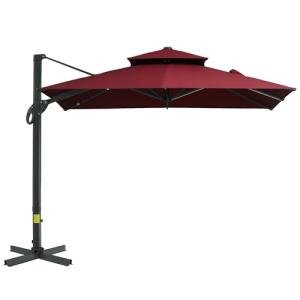
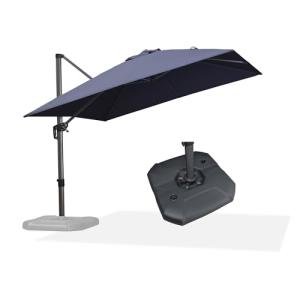
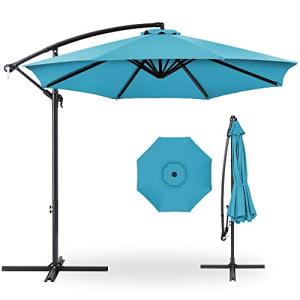
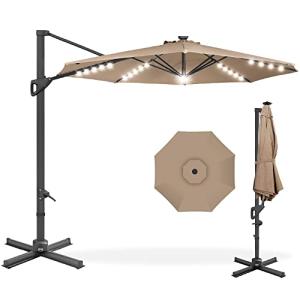
The defining feature is the offset design. A single upright post anchors into a weighted base beside your seating area, and a horizontal or angled arm cantilevers out over the space you want to shade. The canopy hangs from the tip of that arm, hovering overhead without any central support pole cutting through your table or blocking your legroom.
Most quality cantilever umbrellas rotate a full 360 degrees at the base and tilt the canopy anywhere from vertical to a wide horizontal angle. That combination of rotation and tilt means you can track the sun from morning to evening without repositioning your chairs or your base. You simply pivot and angle, lock it in, and go back to enjoying yourself.
That freedom matters more than it might seem. On a typical afternoon in the American South or Southwest, the sun moves fast and shadows shift significantly within an hour. A static umbrella gives you a brief window of shade. A cantilever umbrella gives you the whole afternoon.
The Right Size for Every Space
Cantilever umbrellas come in a wide range of canopy sizes, and choosing the right diameter is one of the most important decisions you'll make.
For a single chaise lounge or a pair of Adirondack chairs, a 9- to 10-foot canopy typically gives full coverage with a little margin on the sides. Step up to an 11- or 12-foot canopy if you're shading a four-person dining set or a larger seating group. For commercial-scale coverage — think resort pool areas, restaurant patios, or large entertainment decks — canopies in the 13- to 16-foot range provide serious square footage without requiring multiple umbrella setups.
One rule of thumb that works well: the canopy should extend at least 2 feet beyond the seating area on all exposed sides. This accounts for the angle of the sun, which rarely comes straight down. A tight-fit canopy that looks like it covers your furniture at noon will leave you with sunburn by 3 p.m.
Square and rectangular cantilever umbrellas have also grown in popularity for Americans who want precise, geometric coverage over a rectangular dining table or a linear lounge setup along a pool deck. Unlike round canopies — which create circular shadows — rectangular designs shade the full footprint of a rectangular space without the gaps at the corners.
Frame Materials: What Lasts Outdoors in the USA
American patios take a beating. Between the UV intensity in Southern states, the humidity of the Gulf Coast and Southeast, and the freeze-thaw cycles of the Midwest and Northeast, outdoor furniture needs to be built for real conditions.
Aluminum frames are the most popular choice for good reason. They're lightweight, corrosion-resistant, and available in powder-coated finishes that hold up against salt air, rain, and intense sun without chipping or fading. Aluminum frames are easy to tilt and rotate, and they won't rust even in coastal climates.
Steel frames offer greater weight and rigidity, which can be an advantage in windier areas or when using a very large canopy. Hot-dip galvanized or powder-coated steel handles moisture well, though it's worth noting that steel is heavier to move and store. High-quality steel cantilever umbrellas are built to stay put through the season rather than be constantly repositioned.
Fiberglass ribs are increasingly common in premium cantilever models, often combined with aluminum or steel pole construction. Fiberglass flexes under wind pressure rather than snapping, which significantly extends the life of the canopy frame — especially in areas prone to afternoon thunderstorms or coastal breezes.
When you're shopping, look at the weight of the pole section and the quality of the locking mechanisms at the tilt and rotation joints. Cheap joints loosen over time; quality construction uses stainless steel hardware at every connection point.
Canopy Fabrics: Shade, Durability, and Color That Stays
The canopy is what you see every day, and it's what takes the hardest abuse from UV rays, moisture, and seasonal storage.
Solution-dyed acrylic fabrics — most commonly available under the Sunbrella brand name — are the gold standard for outdoor canopies in the American market. The color is added to the fiber during manufacturing rather than applied as a surface coating, which means it doesn't fade, peel, or bleach out the way cheaper polyester fabrics do. Solution-dyed acrylic also repels water effectively, dries quickly, and resists mold and mildew.
High-density polyester is a more affordable alternative that works well in covered patios or areas with less direct sun exposure. Look for a tight weave and UV-resistance ratings; thinner polyester canopies can fade noticeably within a single season in high-sun climates like Texas, Arizona, or Florida.
Olefin fabric falls between polyester and acrylic in terms of performance and price. It offers good fade resistance and handles rain well, making it a solid mid-range option.
Whatever fabric you choose, pay attention to the UPF rating. A good cantilever umbrella canopy should carry a UPF 50+ rating, meaning it blocks at least 98% of UV radiation. This matters not just for comfort but for actual skin protection — extended time under a lower-rated canopy still results in meaningful UV exposure.
Base Options and Stability: Don't Overlook This Step
A cantilever umbrella puts significant lateral force on its base. Unlike a center-pole umbrella where gravity does most of the work, an offset arm creates a lever effect — the bigger and heavier the canopy, the more stabilizing weight you need at the base.
Most cantilever umbrellas in the 9- to 11-foot range require at least 100 to 150 pounds of base weight in calm conditions. In areas with regular afternoon wind — most of the American plains, coastal regions, or elevated areas — go heavier. For canopies 13 feet and above, 200 or more pounds of base weight is often recommended.
Base styles vary considerably. Cross-base designs use a flat X or plus-shaped frame filled with weight plates or sand bags. Wheel bases add mobility, letting you roll the entire setup to a new location. Planter bases double as a container garden, embedding the umbrella pole within a large planter filled with soil or gravel. Some homeowners anchor bases directly to deck surfaces using mounting hardware for permanent installs.
A useful safety habit: close the canopy any time wind picks up above 20 mph or when you're leaving the patio unattended for an extended period. Even well-anchored bases can shift under sustained gusts with a large open canopy acting as a sail.
Features Worth Looking For
The best cantilever umbrellas combine easy operation with durability that earns its price over several seasons. Here are the features worth prioritizing when you compare models:
Crank or auto-tilt mechanism — Opening a large canopy by hand gets old quickly. A smooth crank lift system and one-touch tilt adjustment make daily use effortless and reduce the strain on the canopy joints over time.
360-degree rotation — Full rotation on a smooth bearing lets you track the sun throughout the day. Some budget models offer only partial rotation, which limits your flexibility considerably.
Ventilation panels — A double-vent canopy top allows hot air to escape and reduces wind resistance. This extends canopy life and keeps the space underneath noticeably cooler on hot days.
UV-resistant powder coating — Applies to the frame, not just the fabric. A quality powder coat should resist chalking and peeling for at least five years of outdoor exposure.
Weather cover included — A fitted weather cover keeps the canopy clean and protected when the umbrella is closed for extended periods or during winter storage.
Maintenance and Storage
Cantilever umbrellas are low-maintenance by design, but a little seasonal care goes a long way toward a longer lifespan.
Clean the canopy fabric two or three times per season with mild soap and lukewarm water. Avoid bleach on colored fabrics unless the manufacturer specifically allows it. Rinse thoroughly and let dry completely before closing to prevent mildew in the folds.
Lubricate the tilt joint and rotation bearing once a season with a silicone-based spray. This keeps both mechanisms moving smoothly and prevents the metal-on-metal wear that leads to squeaking and loosening over time.
Before winter in cold climates, close the canopy, cover it with a weather-resistant cover, or better yet, bring it inside a garage or storage shed. Frame materials handle freezing temperatures well, but frozen moisture in the canopy fabric or joints can accelerate wear.
Finding the Right Cantilever Umbrella for Your Space
The American patio market offers cantilever umbrellas at every price point, from entry-level backyard options under $200 to commercial-grade installations that run several thousand dollars. In general, the sweet spot for homeowners who want quality that holds up for five or more seasons sits in the $400 to $900 range for a 10- to 13-foot residential model with a durable frame and solution-dyed fabric.
Before you buy, measure your intended shade area and identify your base placement options. Check whether your space has concrete, decking, grass, or gravel — this affects which base style will work best. And pay attention to the warranty: reputable manufacturers stand behind their products with at least a two-year frame warranty and a separate fabric warranty of three years or more.
A cantilever umbrella is one of the highest-return investments you can make in outdoor living. It turns a sun-baked patio into a usable, comfortable space for more of the day, across more of the year — and it does it without asking you to rearrange your entire outdoor setup every time the sun moves.
That's shade on your terms.